Redesigning Screening with Criteria-Based Intelligence
How I designed a unified AI screening system for IIIP that replaced gut-feel resume scanning with structured, explainable candidate evaluation.
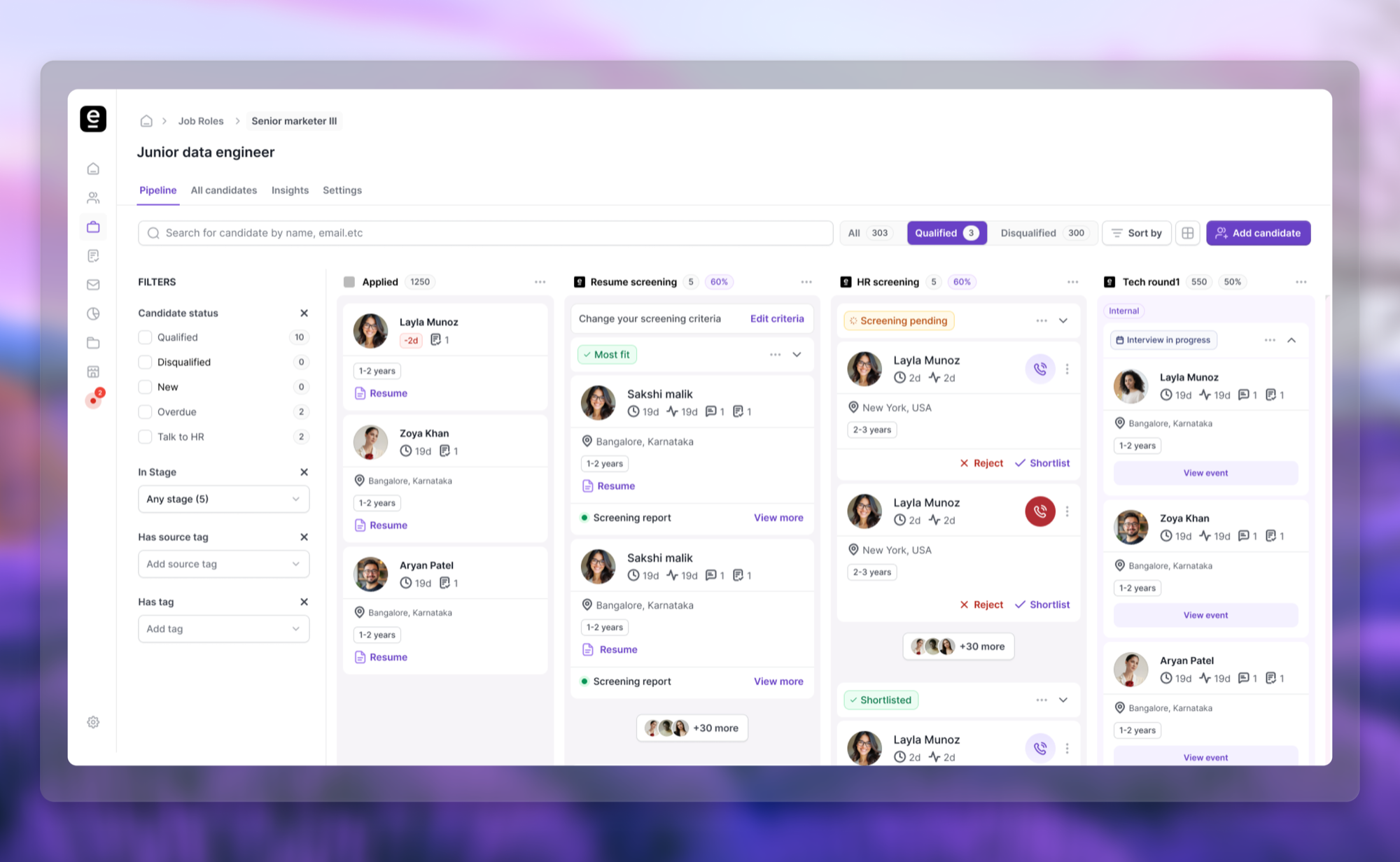
Background - Intervue
Intervue started as an interview outsourcing platform, like Uber for tech interviews. Companies with engineer bandwidth issues would send requests, and we'd assign anonymous external interviewers. But the problem wasn't just interviews. It was the entire hiring infrastructure.
The Origin
Companies were stitching together 6–8 tools just to hire one person, ATS, job boards, assessment platforms, video tools, calendars, spreadsheets. Fragmented data, inconsistent evaluation, slow cycles.
The Evolution
Intervue evolved into IIIP, an all-in-one hiring platform covering AI sourcing, AI screening, interviews, analytics, and offers. I designed every screen across this entire ecosystem.
The Positioning
Where traditional ATS tools make companies switch between platforms, IIIP consolidates the entire pipeline. One job, one platform, one source of truth, from sourcing to offer letter.
The Scale
Currently in beta with 4 enterprise customers using the platform for various hiring needs, from high-volume BPO hiring to specialized tech roles.
The Hiring Funnel is Broken at the Top
Massive candidate volume enters the funnel, but without structured screening, most drop-offs happen at the wrong stages, wasting interviewer time and losing good candidates.
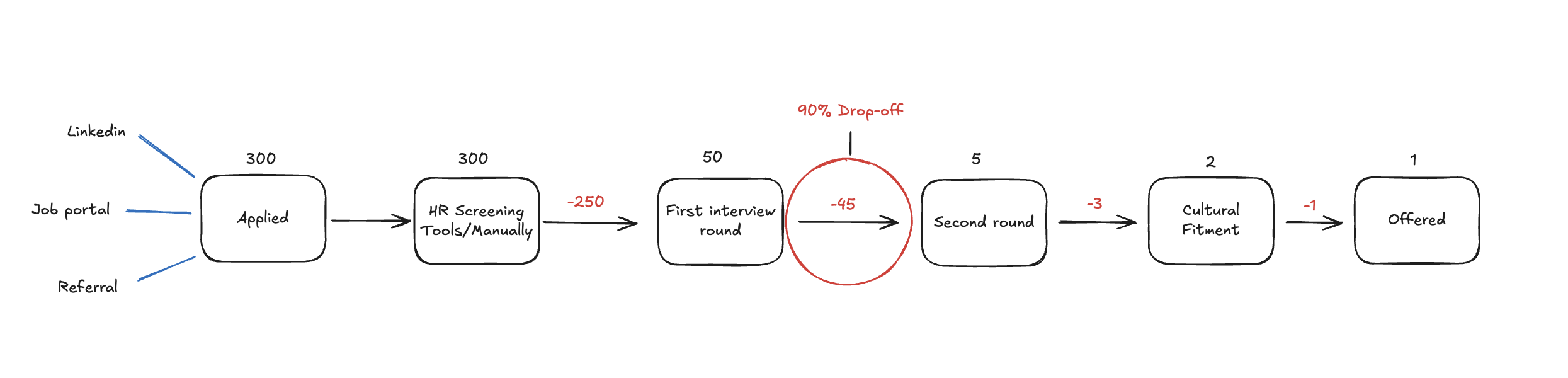
From Recruiter Pain Points to Design Solutions
By shadowing recruiters and analyzing pipeline drop-offs, I mapped each critical screening breakdown directly to a foundational design solution.
Two recruiters review the same resume and make opposite, gut-feel decisions.
AI turns natural-language criteria into an objective, standardized team rubric.
Legacy ATS filters reject qualified talent over missing literal buzzwords.
AI evaluates real competence and project context rather than string-matching keywords.
Communication and culture fit remain invisible until late, costly phone screens.
Pairs resume parsing with async video intros to evaluate communication upfront.
Reviewing 200+ resumes degrades consistency, leaving late applicants overlooked.
Instant, evidence-backed fit tiers ensure equal, zero-fatigue evaluation at scale.
Screening was a filter, not an evaluation. It removed people — but didn’t actually assess them.
The Core Insight
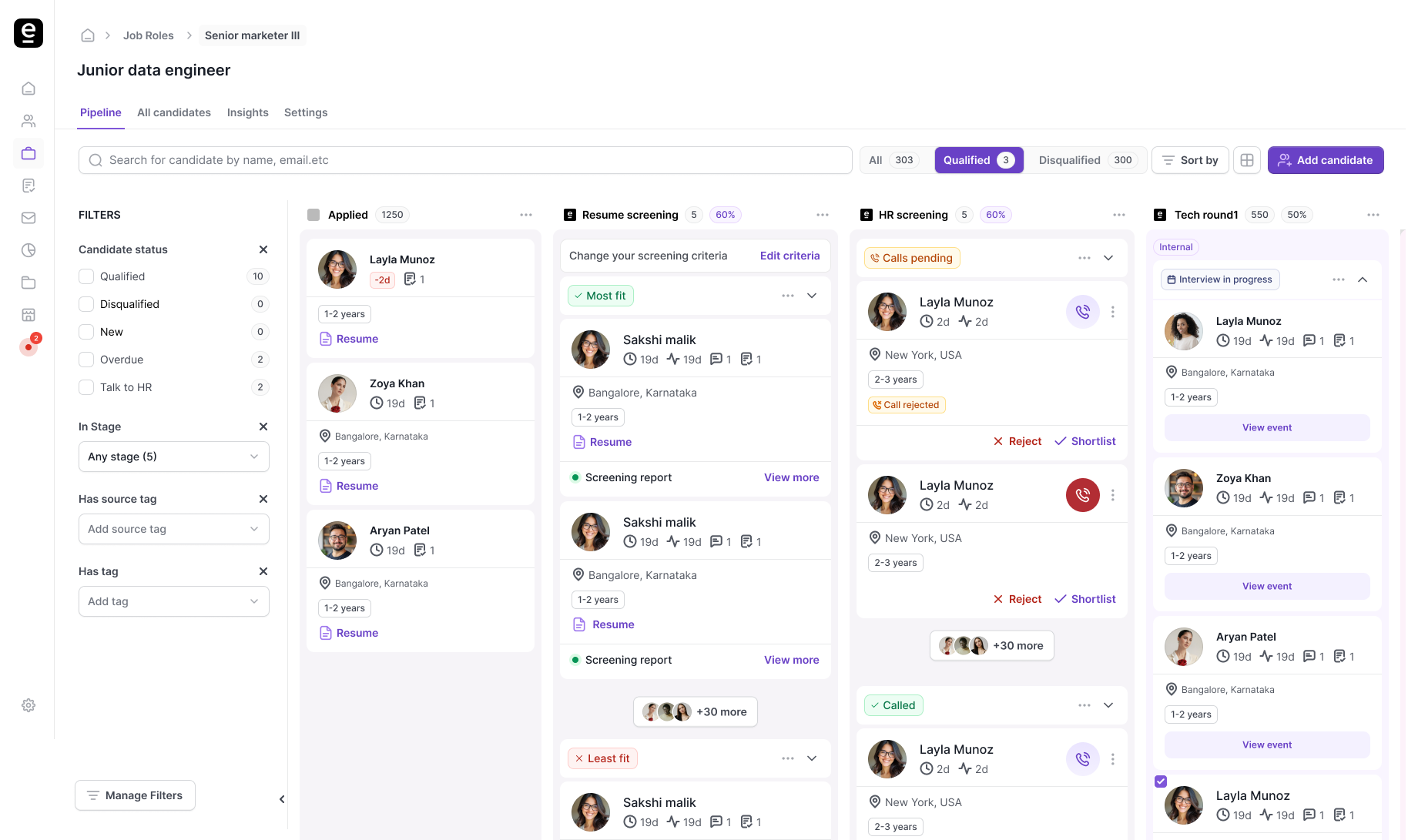
The 4 Solutions in the Interface
How each core design solution was translated into production interfaces—from plain-English rubric setup to evidence-backed candidate evaluation and pipeline automation.
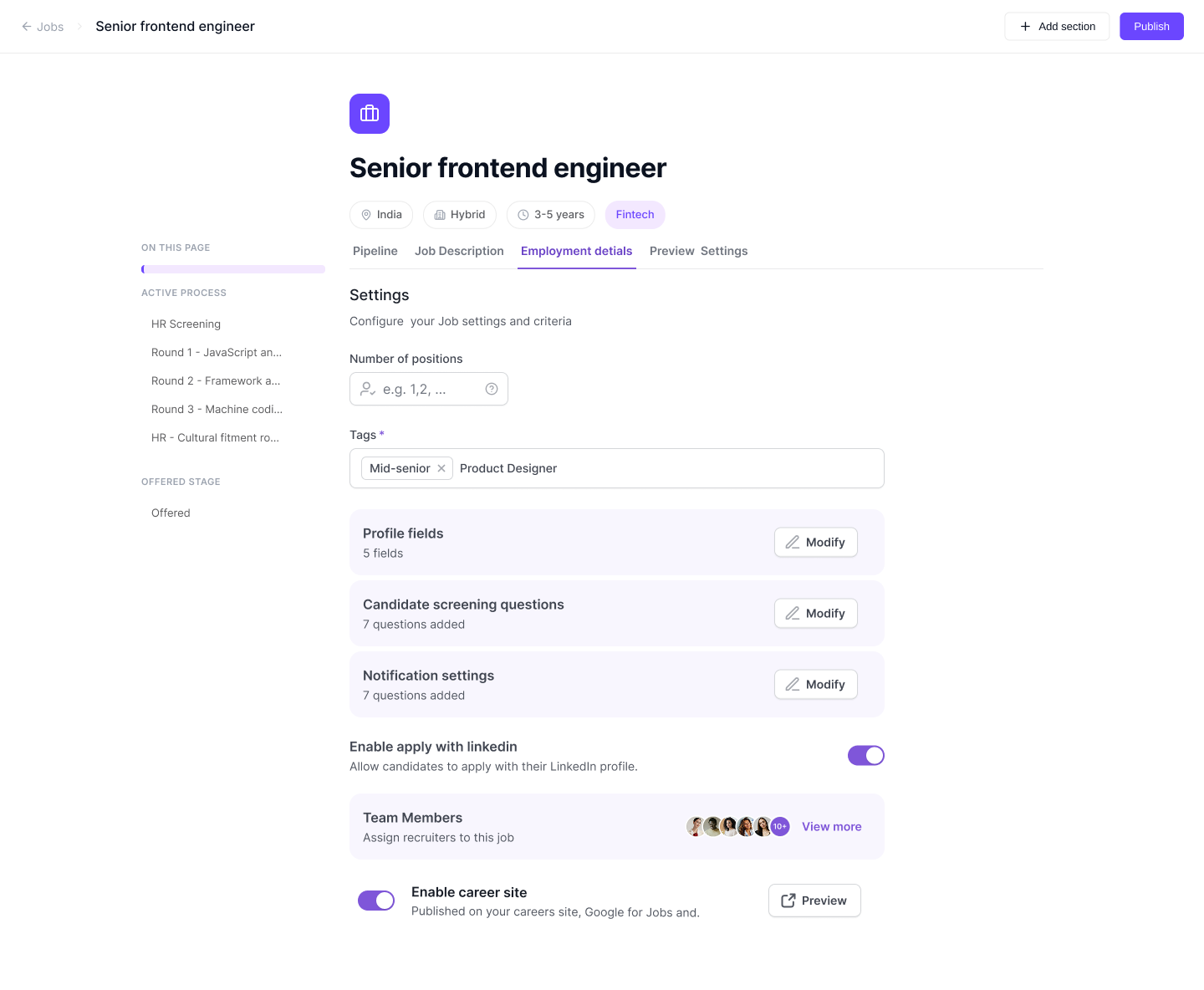
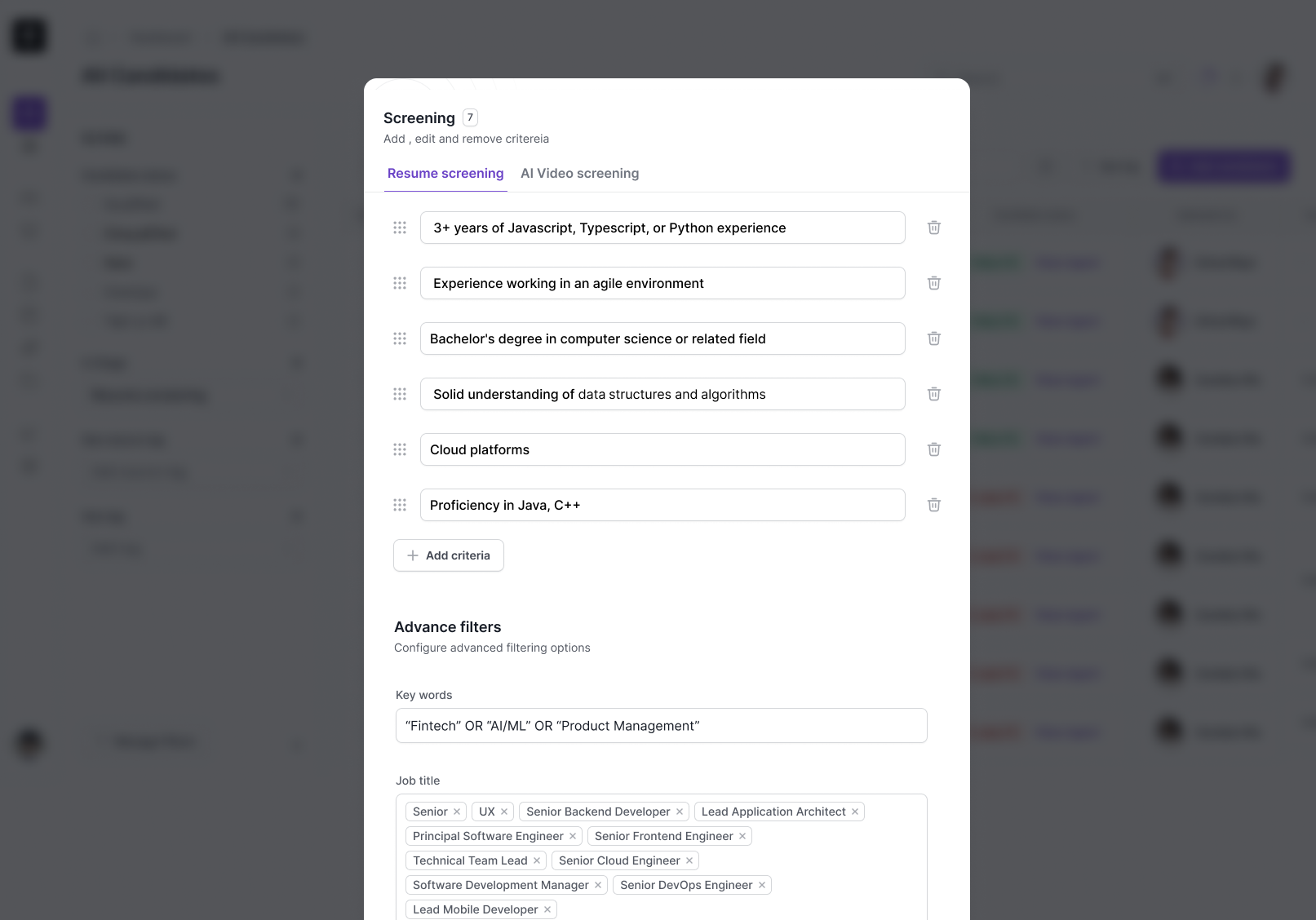
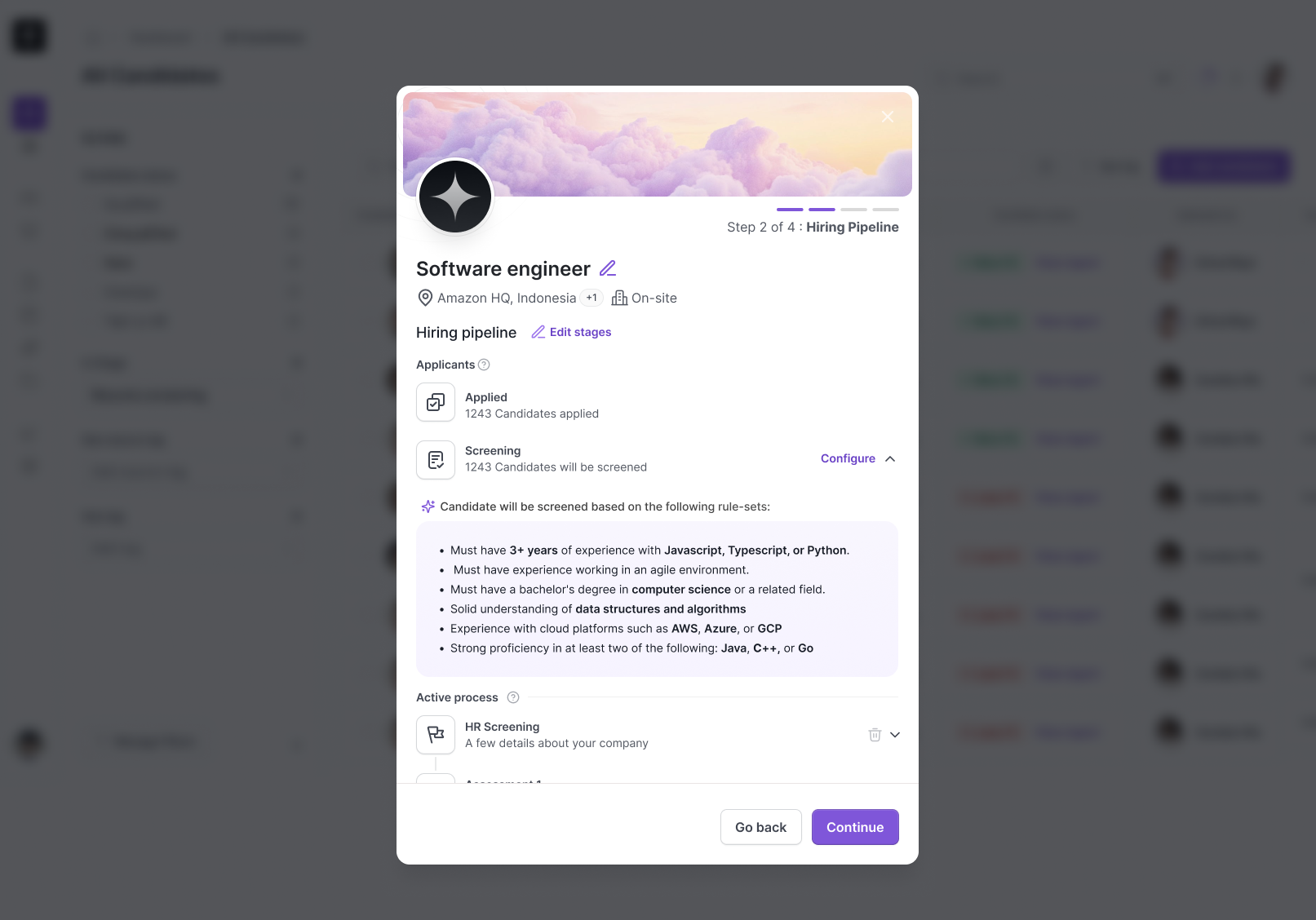
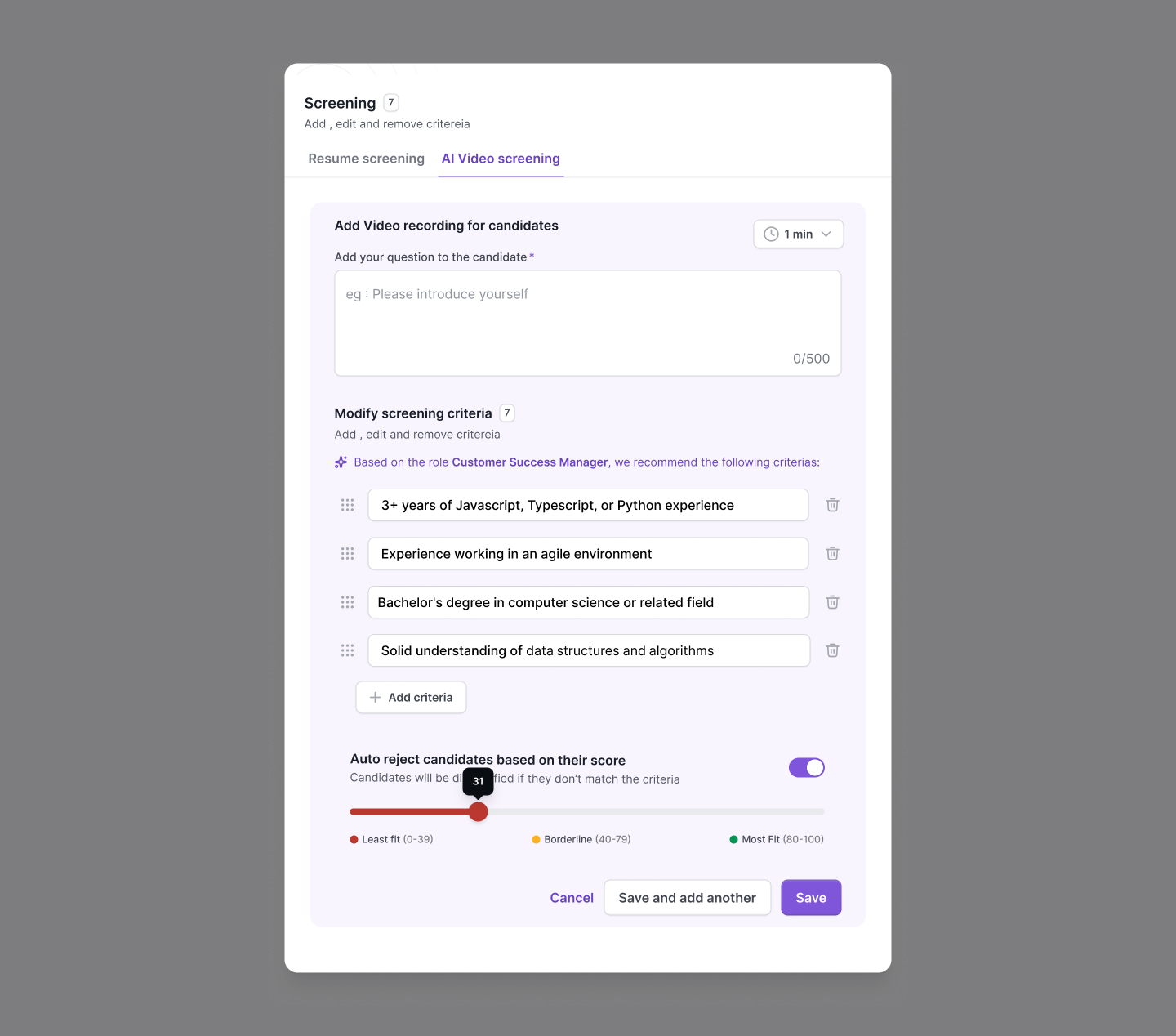
Plain-English Rubrics
Recruiters define criteria in natural language during job setup. AI translates expectations into an objective, standardized rubric—eliminating subjective gut-feel across the team.
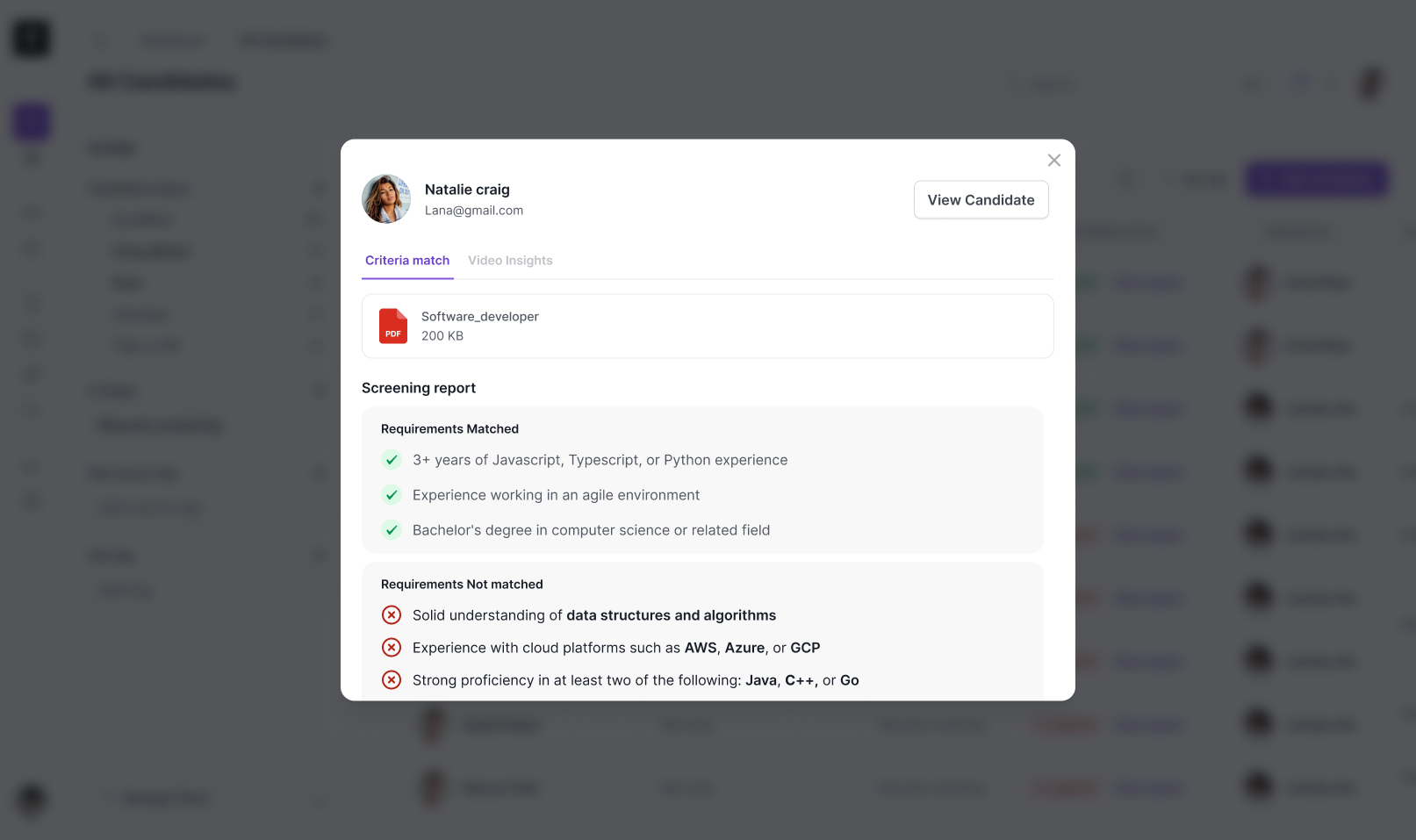
Semantic Evidence Matching
Evaluates contextual capability rather than literal keywords, citing verbatim proof snippets from the resume for every matched and unmatched requirement.
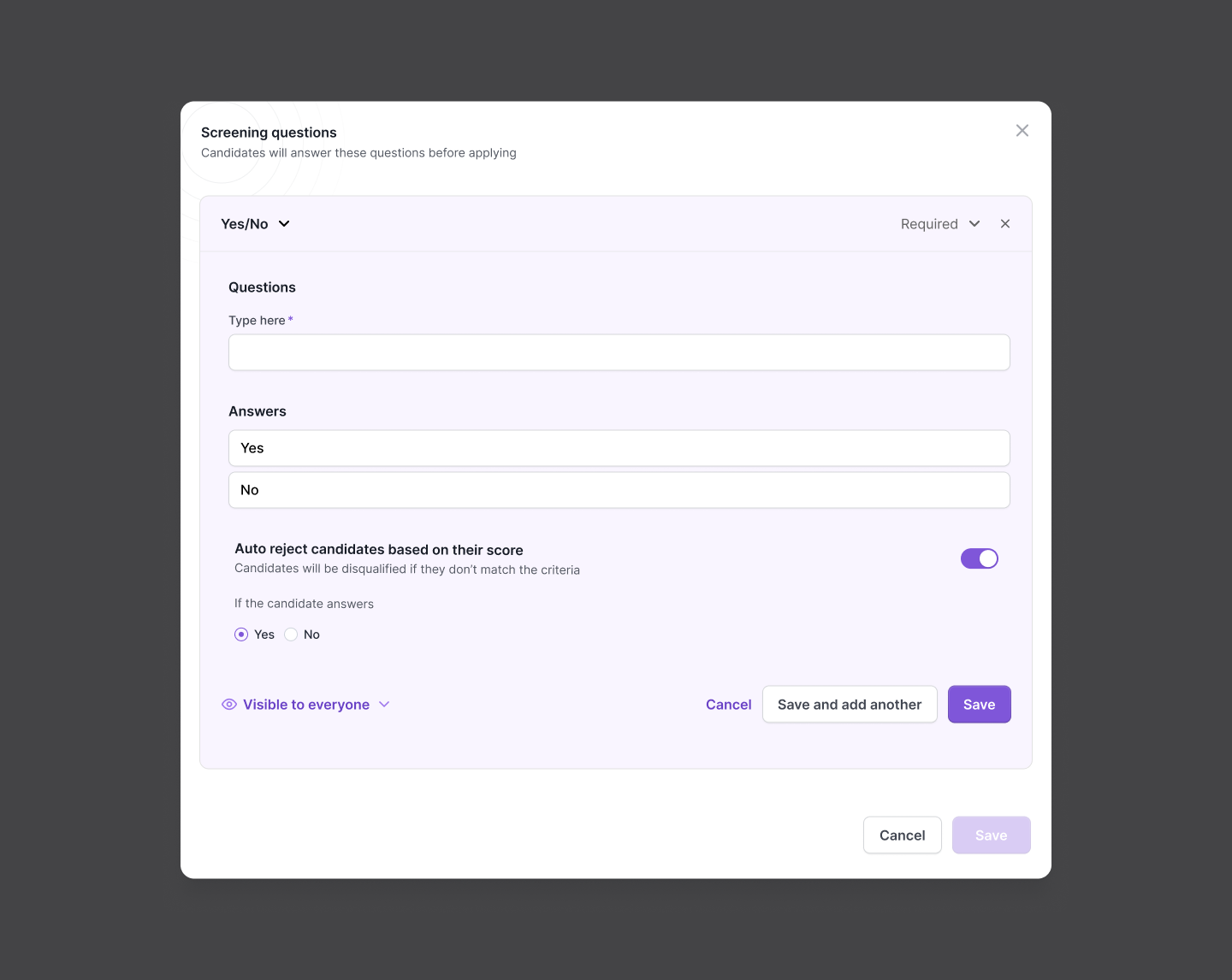
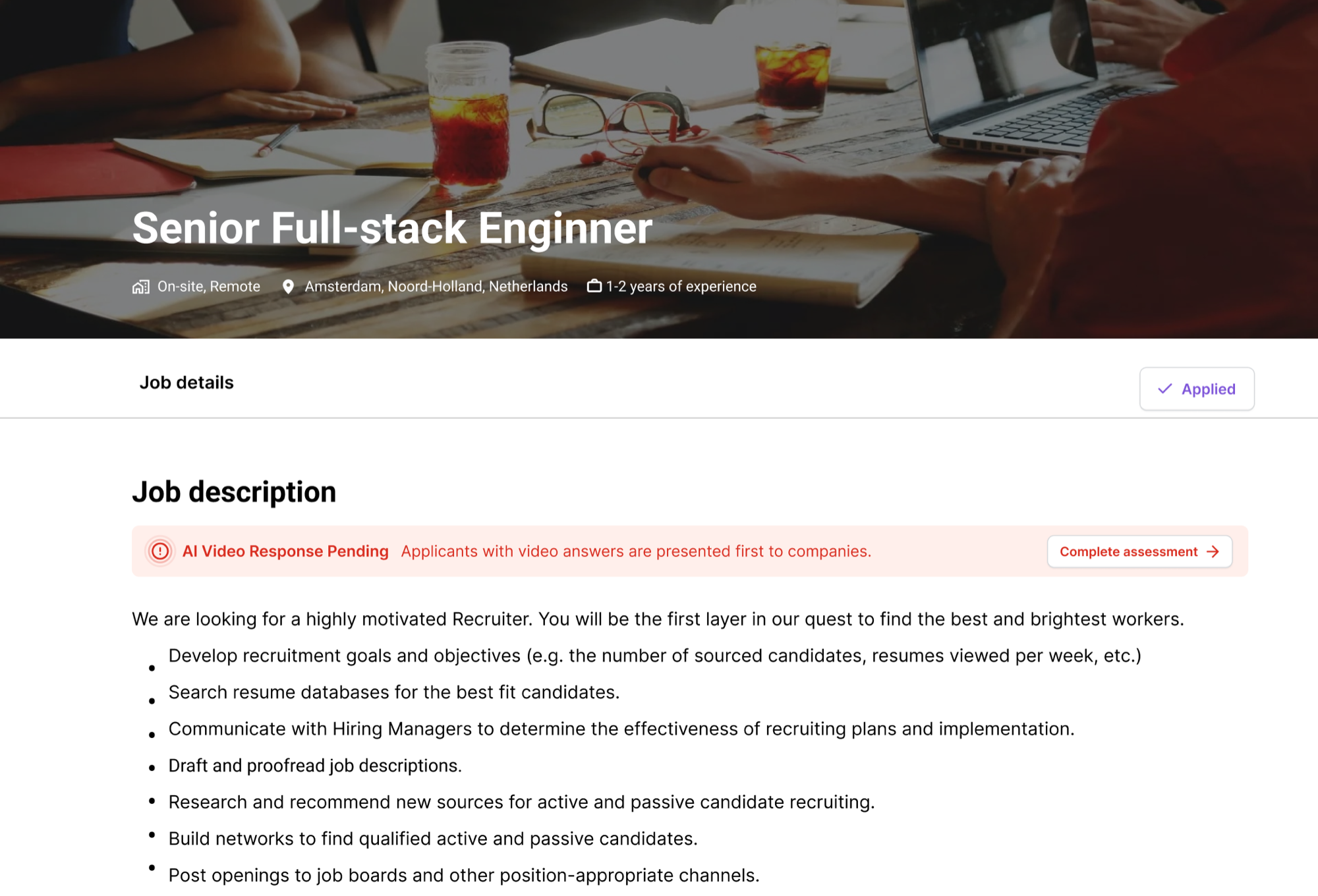
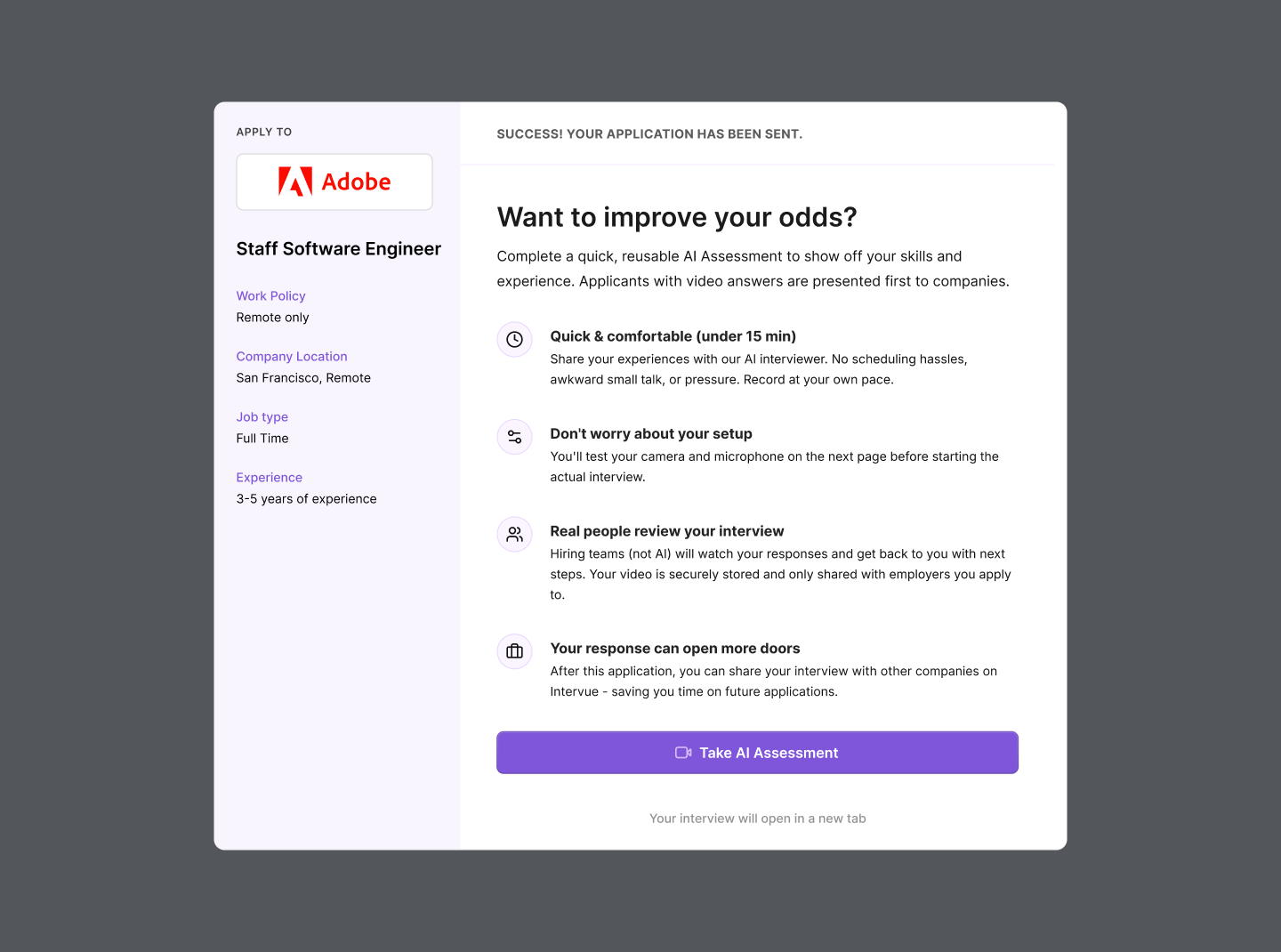
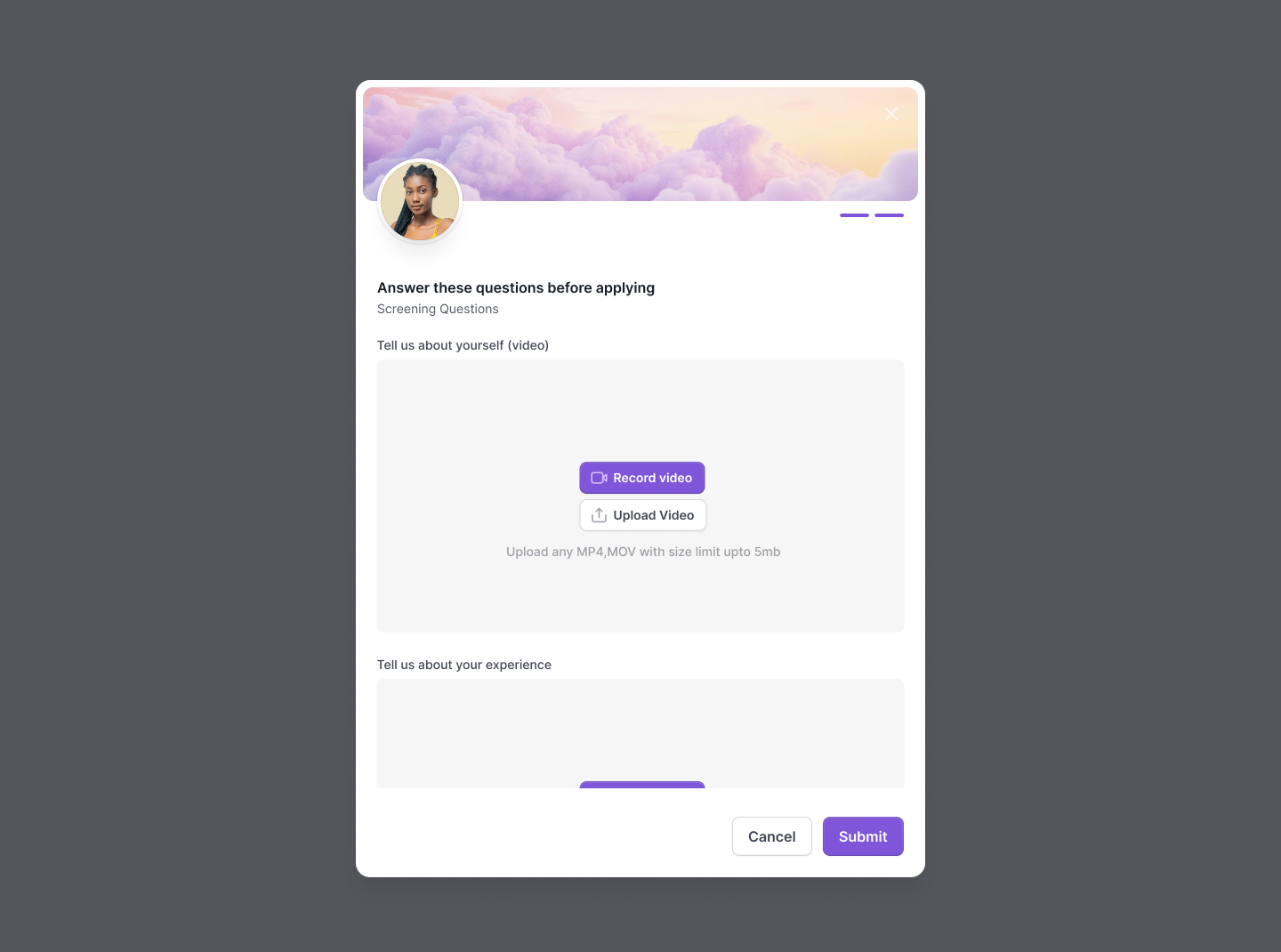
Multi-Signal Screening
Pairs resume parsing with short async video intros, surfacing communication clarity and soft skills upfront before scheduling expensive phone screens.
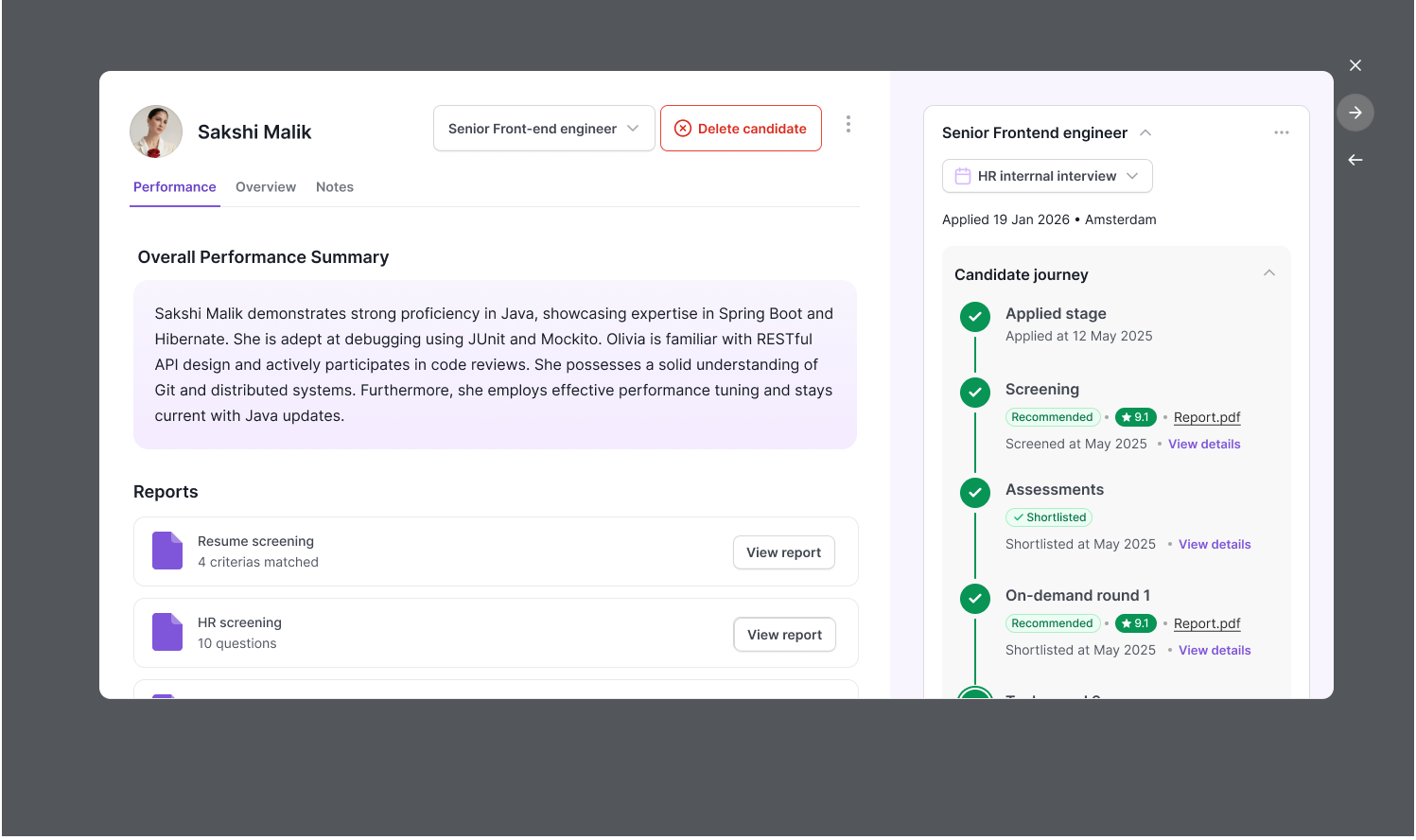
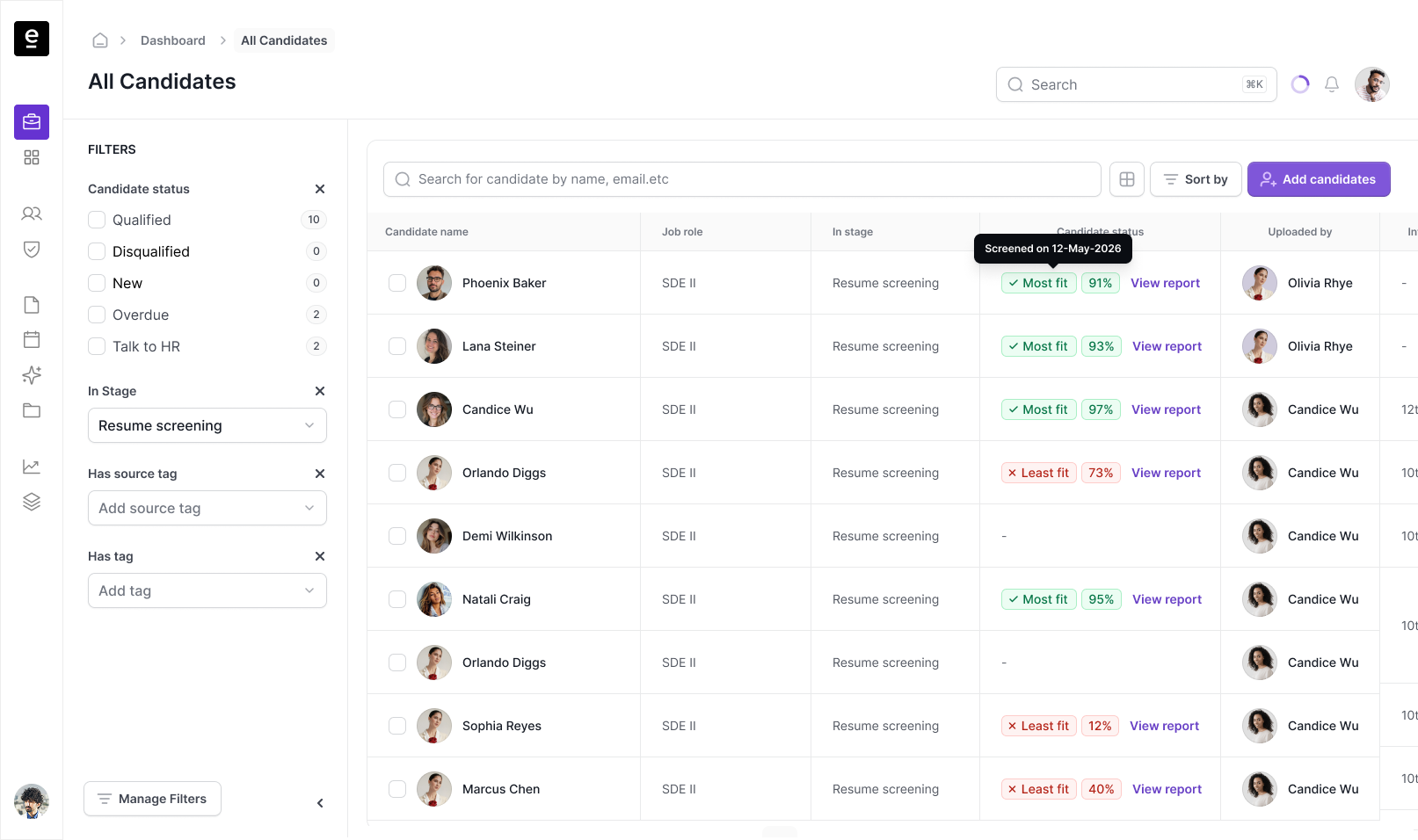
Transparent Fit Tiers
Automatically categorizes applicants into Most Fit, Borderline, and Least Fit tiers with evidence-backed scores—ensuring zero-fatigue, consistent evaluation at scale.
Design Outcomes
Impact measured through design system adoption, workflow efficiency, and structural improvements to the hiring pipeline.