
Making AI hiring decisions explainable
How I designed a unified AI screening system for IIIP that turned opaque candidate filtering into explainable, criteria-backed decisions, reducing screening drop-off from 90% to 40%.
Background - Intervue
Intervue started as an interview outsourcing platform, like Uber for tech interviews. Companies with engineer bandwidth issues would send requests, and we'd assign anonymous external interviewers. But the problem wasn't just interviews. It was the entire hiring infrastructure.
The Origin
Companies were stitching together 6–8 tools just to hire one person, ATS, job boards, assessment platforms, video tools, calendars, spreadsheets. Fragmented data, inconsistent evaluation, slow cycles.
The Evolution
Intervue evolved into IIIP, an all-in-one hiring platform covering AI sourcing, AI screening, interviews, analytics, and offers. I designed every screen across this entire ecosystem.
The Positioning
Where traditional ATS tools make companies switch between platforms, IIIP consolidates the entire pipeline. One job, one platform, one source of truth, from sourcing to offer letter.
The Scale
Currently in beta with 4 enterprise customers using the platform for various hiring needs, from high-volume BPO hiring to specialized tech roles.
The Hiring Funnel is Broken at the Top
Massive candidate volume enters the funnel, but without structured screening, most drop-offs happen at the wrong stages, wasting interviewer time and losing good candidates.
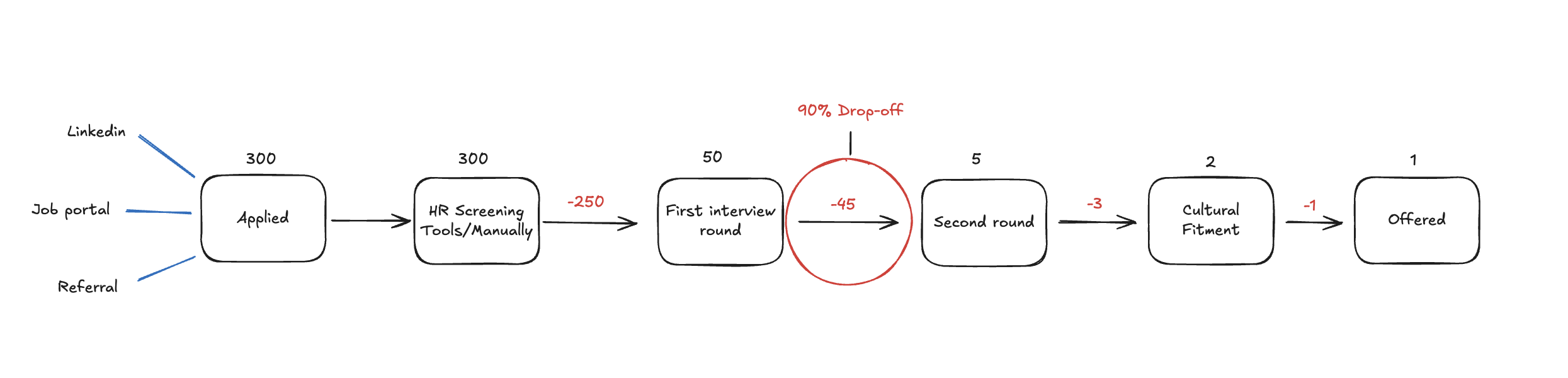
From recruiter pain points to solutions
By shadowing recruiters and studying where candidates dropped off, I found four places where screening broke down. For each one I asked a How might we question, and the solution is my answer to it.
No shared rubric
Two recruiters, same resume, opposite decisions.
How might we help every recruiter judge the same way?
Write it in plain English
Requirements typed as simple sentences, applied to every applicant.
Keyword blindness
Good people rejected over missing buzzwords.
How might we show why someone fits?
See why someone fits
Each requirement marked met or not met.
No early soft signals
Communication only shows up in late phone screens.
How might we hear from candidates before the first call?
Hear from candidates first
A short video answer sits next to the resume.
Screening fatigue
200+ resumes per role wear reviewers down.
How might we surface the strongest applicants first?
Spot the best matches
Every applicant tagged Most fit or Least fit.
Screening was a filter, not an evaluation. It removed people, but didn’t actually assess them.
The Core Insight
The 4 Solutions in the Interface
What each solution looks like in the product, from setting up a job to reviewing the people who applied.
Write what you want, in plain English
While creating a job, the recruiter types requirements as simple sentences, like “3+ years of JavaScript, TypeScript or Python”. Every applicant is then checked against that same list, so two recruiters can no longer reach opposite verdicts on the same resume.
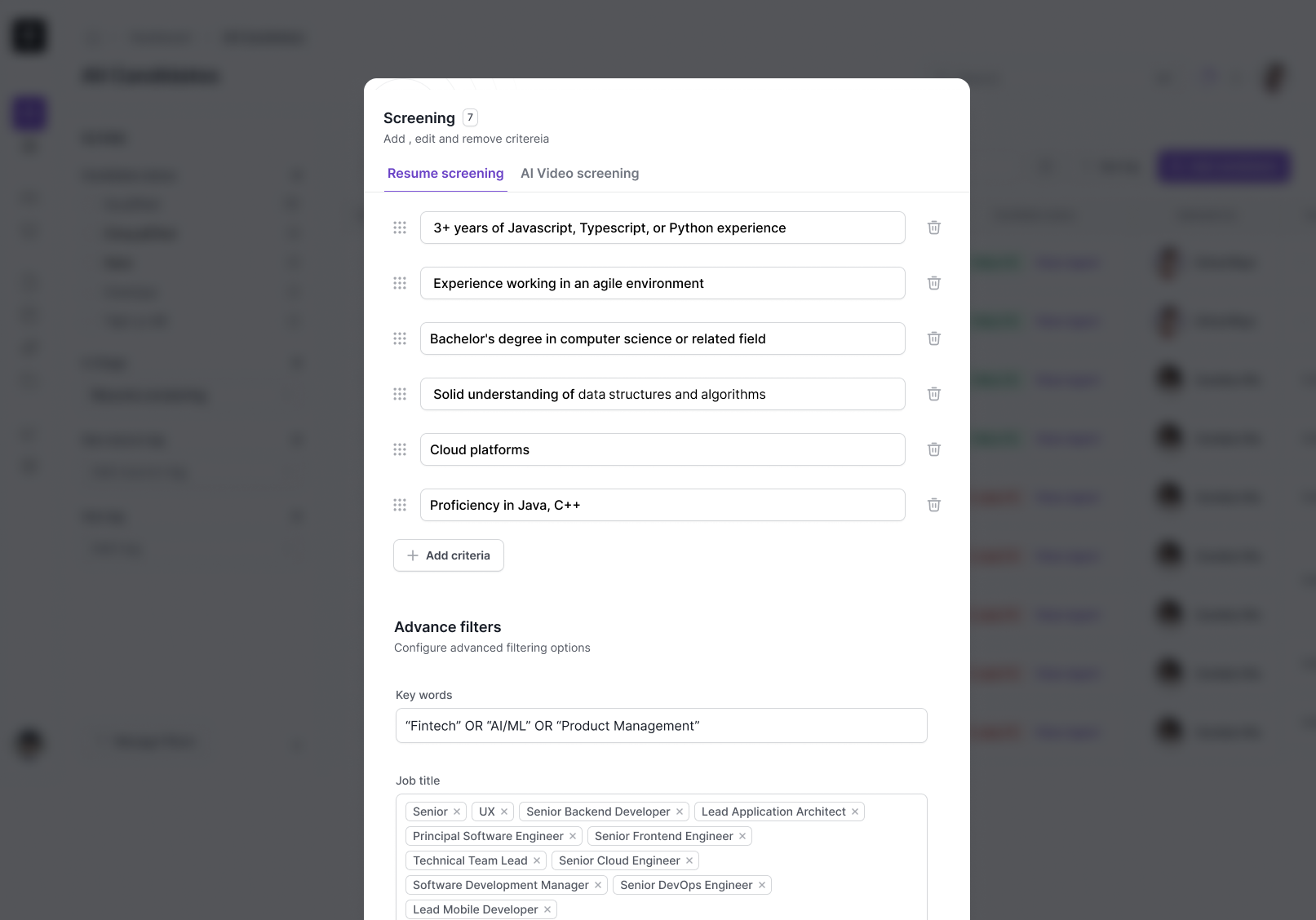
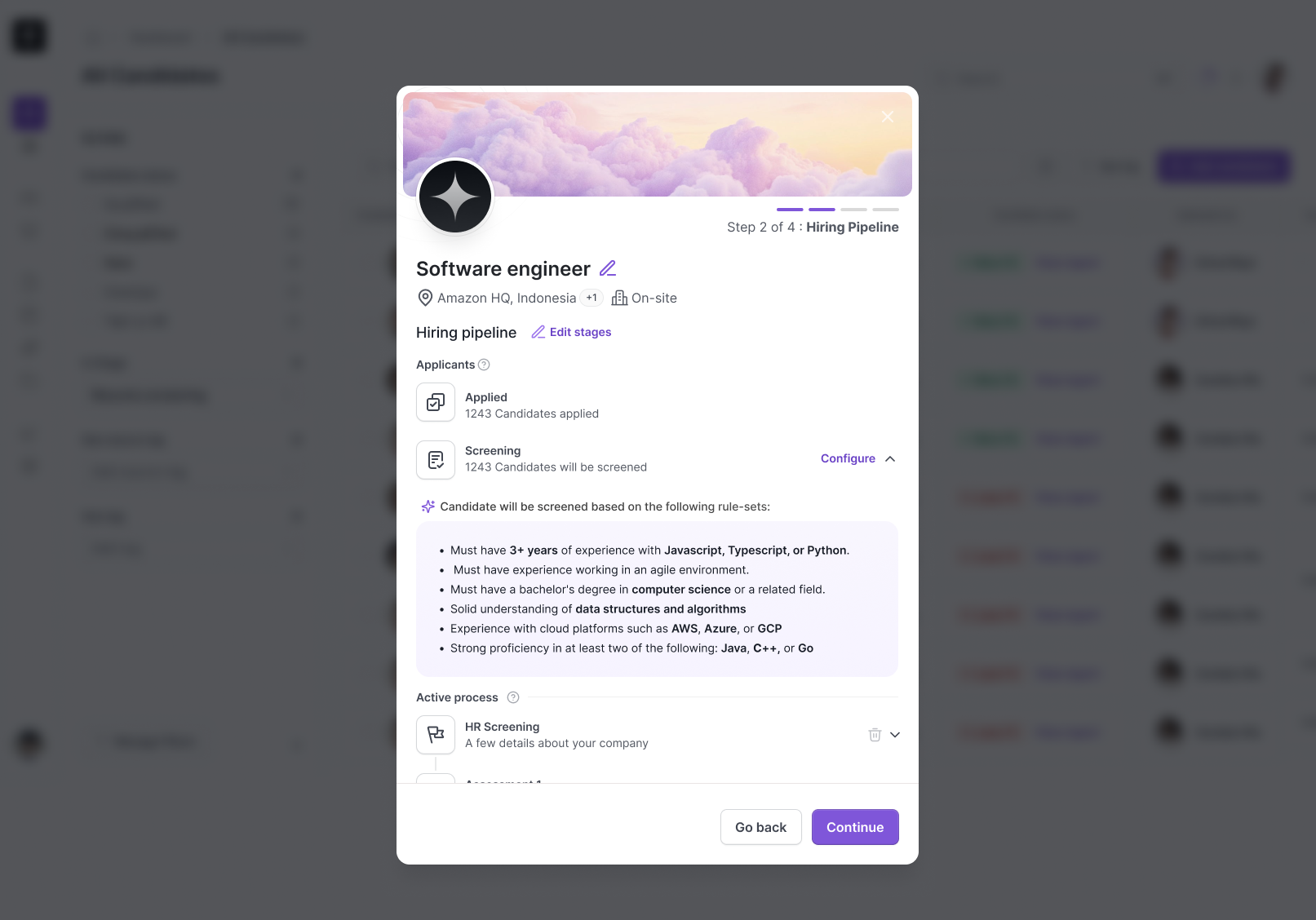
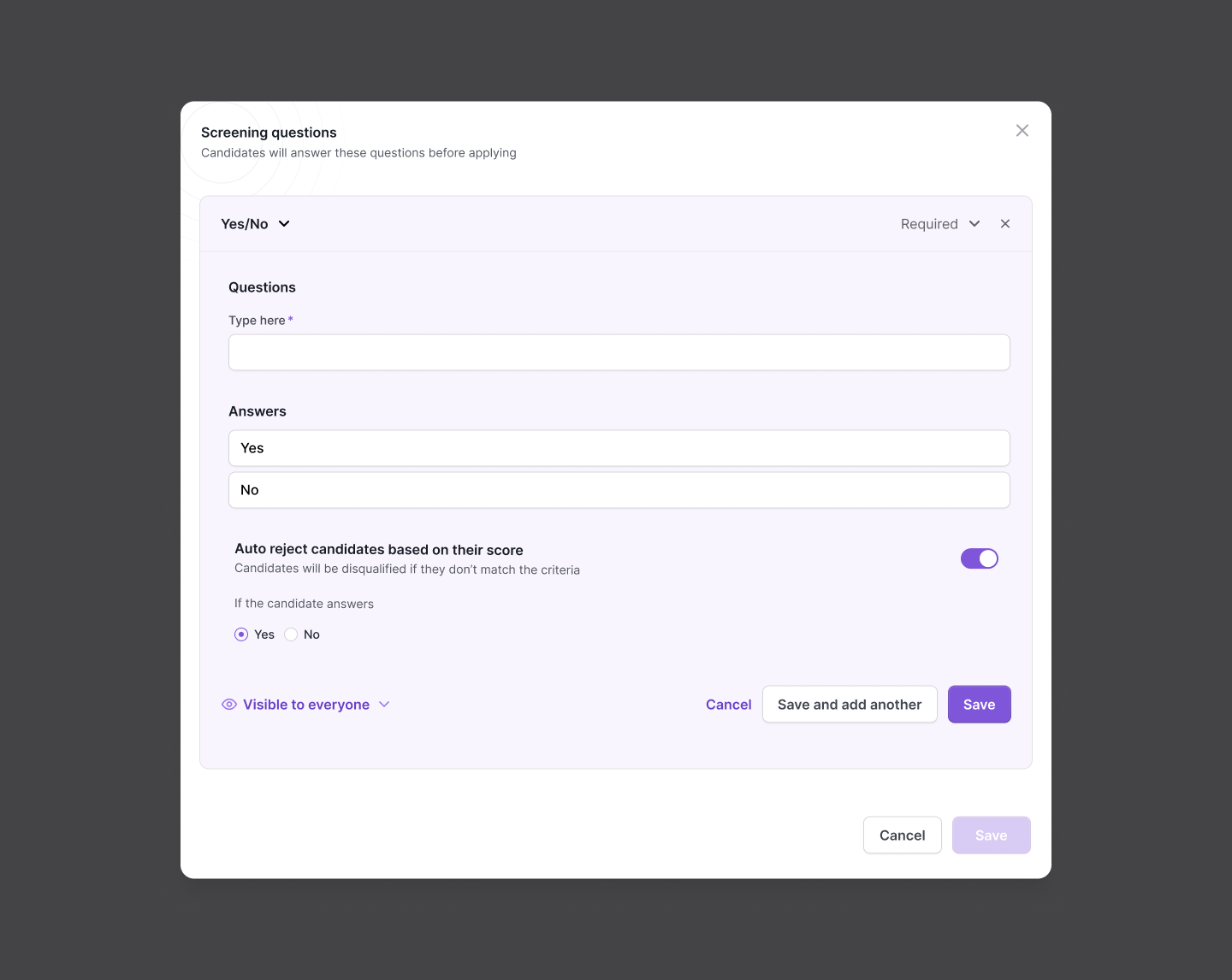
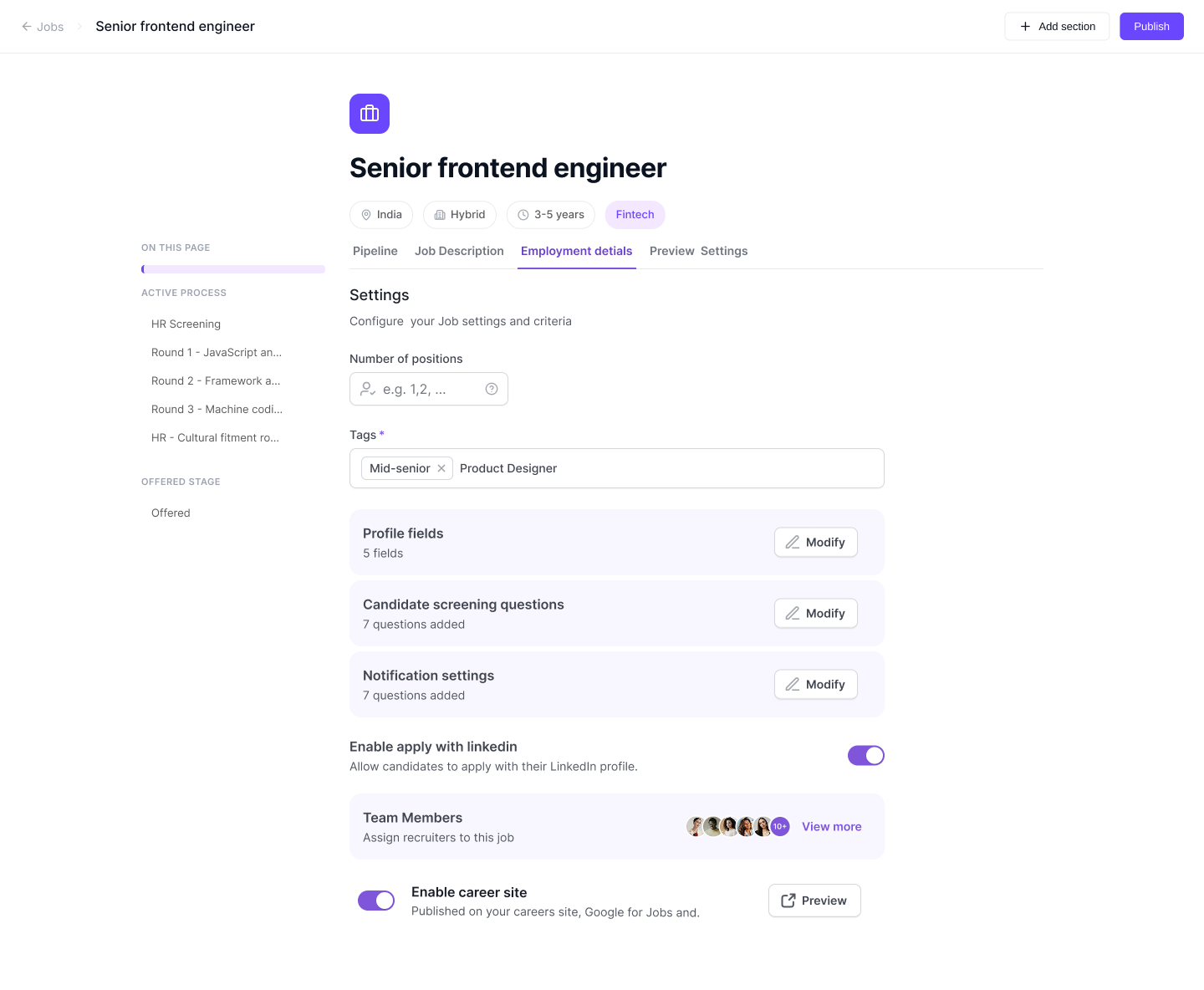
Step 1: the recruiter lists what the role needs, one plain sentence per line.
See exactly why someone fits
Each applicant gets a report that goes through the requirements one by one and marks them as met or not met. Recruiters see the reasoning, not just a score, and can open the candidate’s full profile to see their summary and progress.
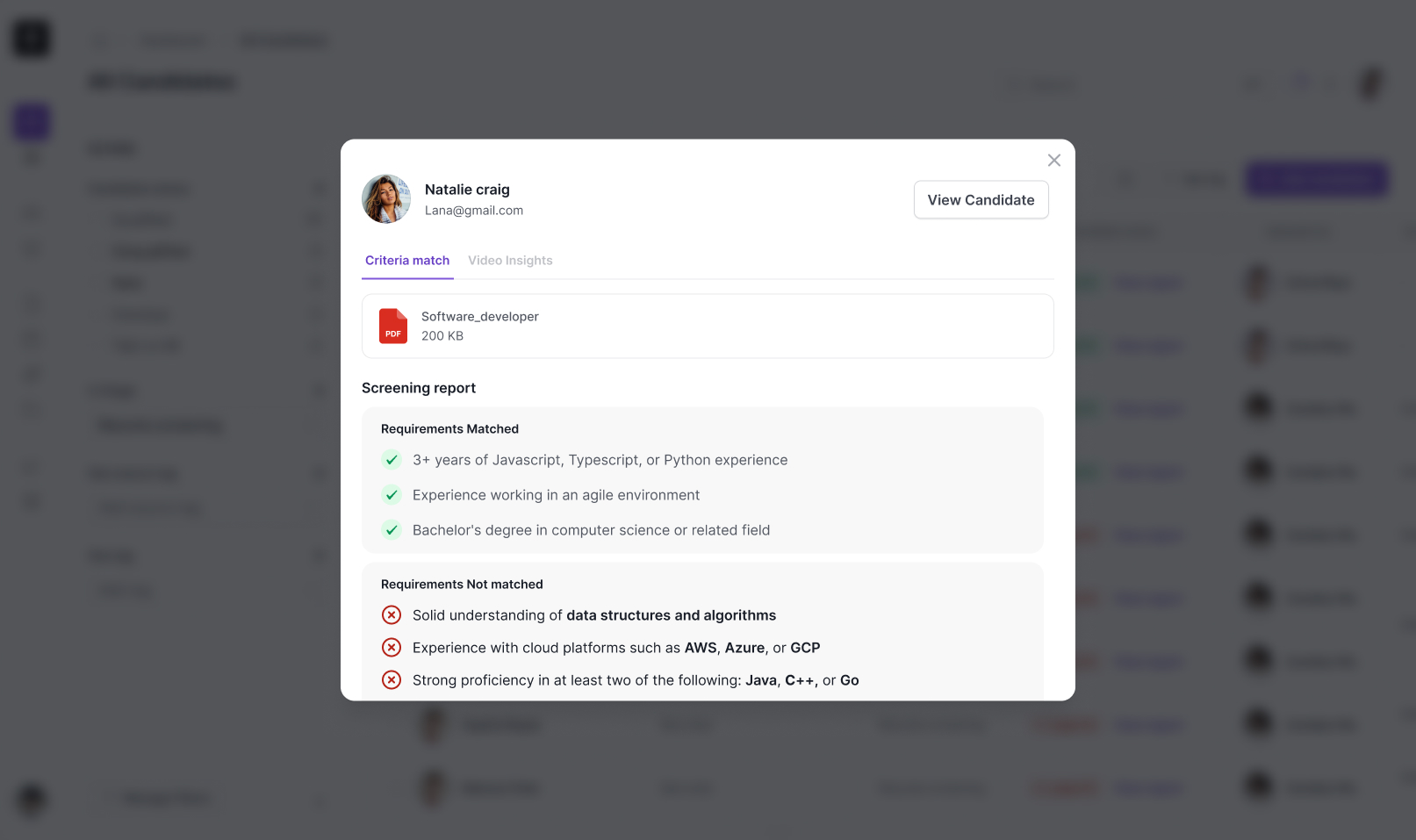
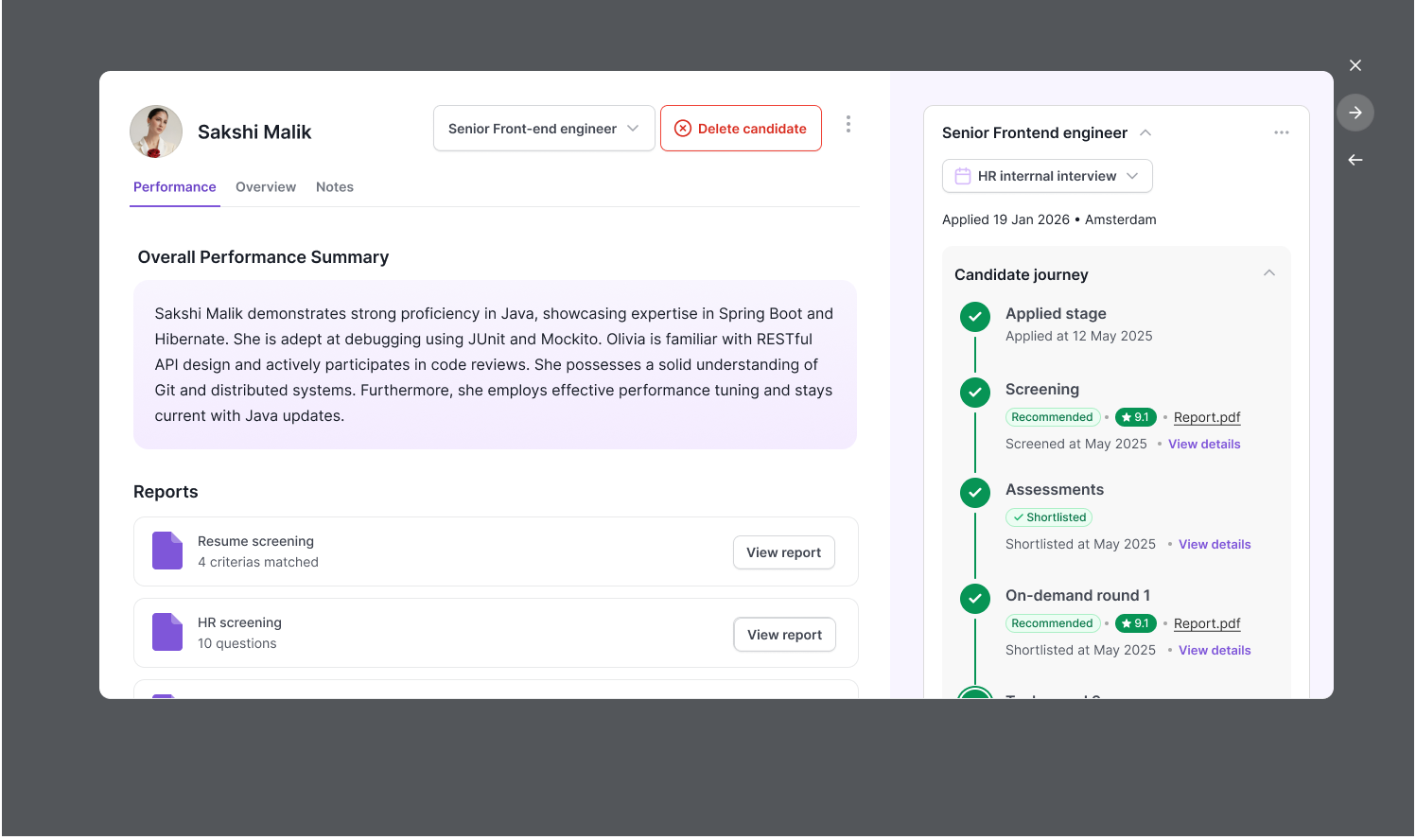
Natalie meets 3 of the 6 requirements. Matched ones get a green tick, missing ones a red cross.
Hear from candidates before the first call
Alongside the resume, recruiters can ask for a short video answer such as “Please introduce yourself”. Applicants with a video are shown to companies first, so most record one, and recruiters can judge how someone communicates before booking a phone screen.
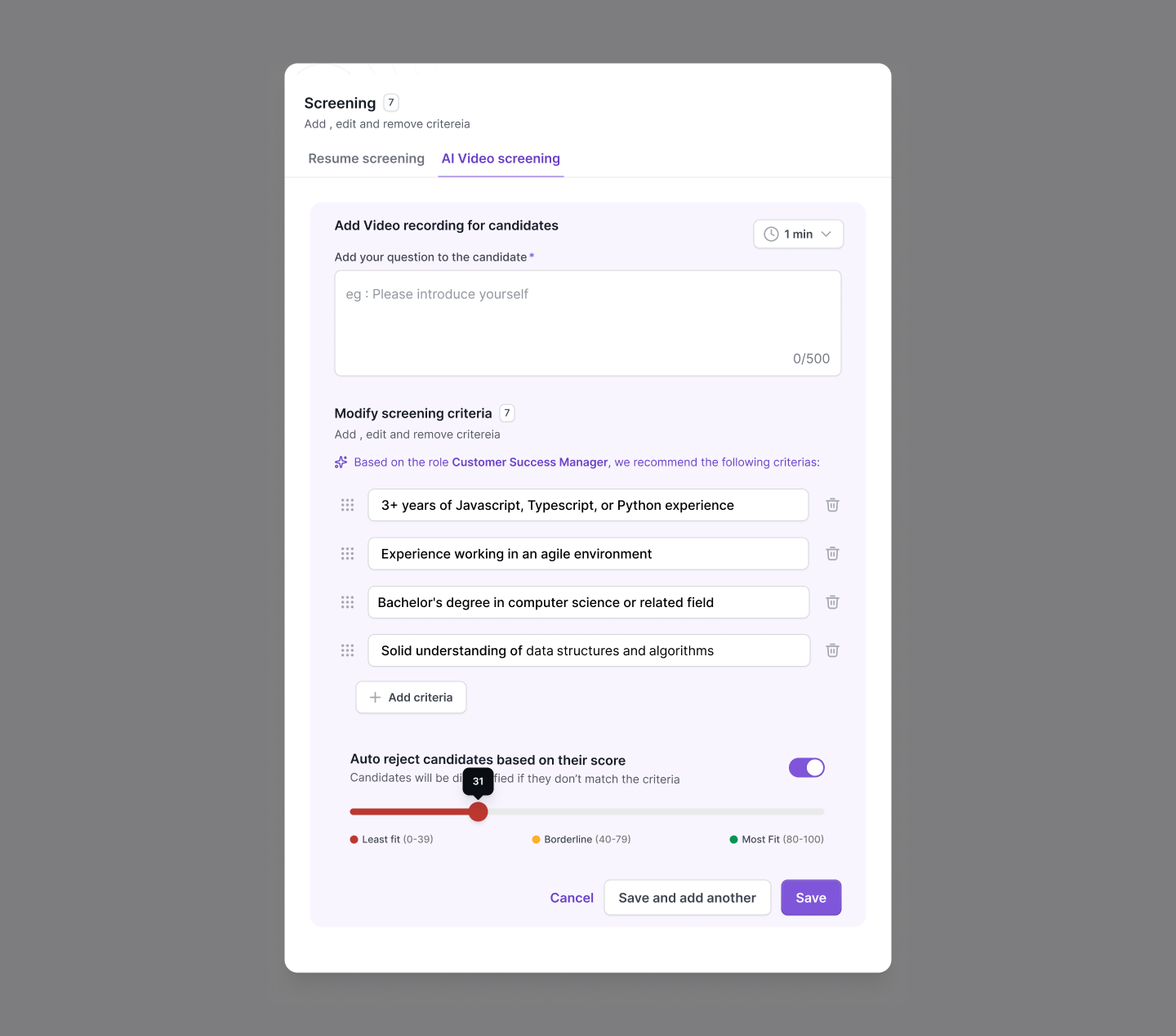
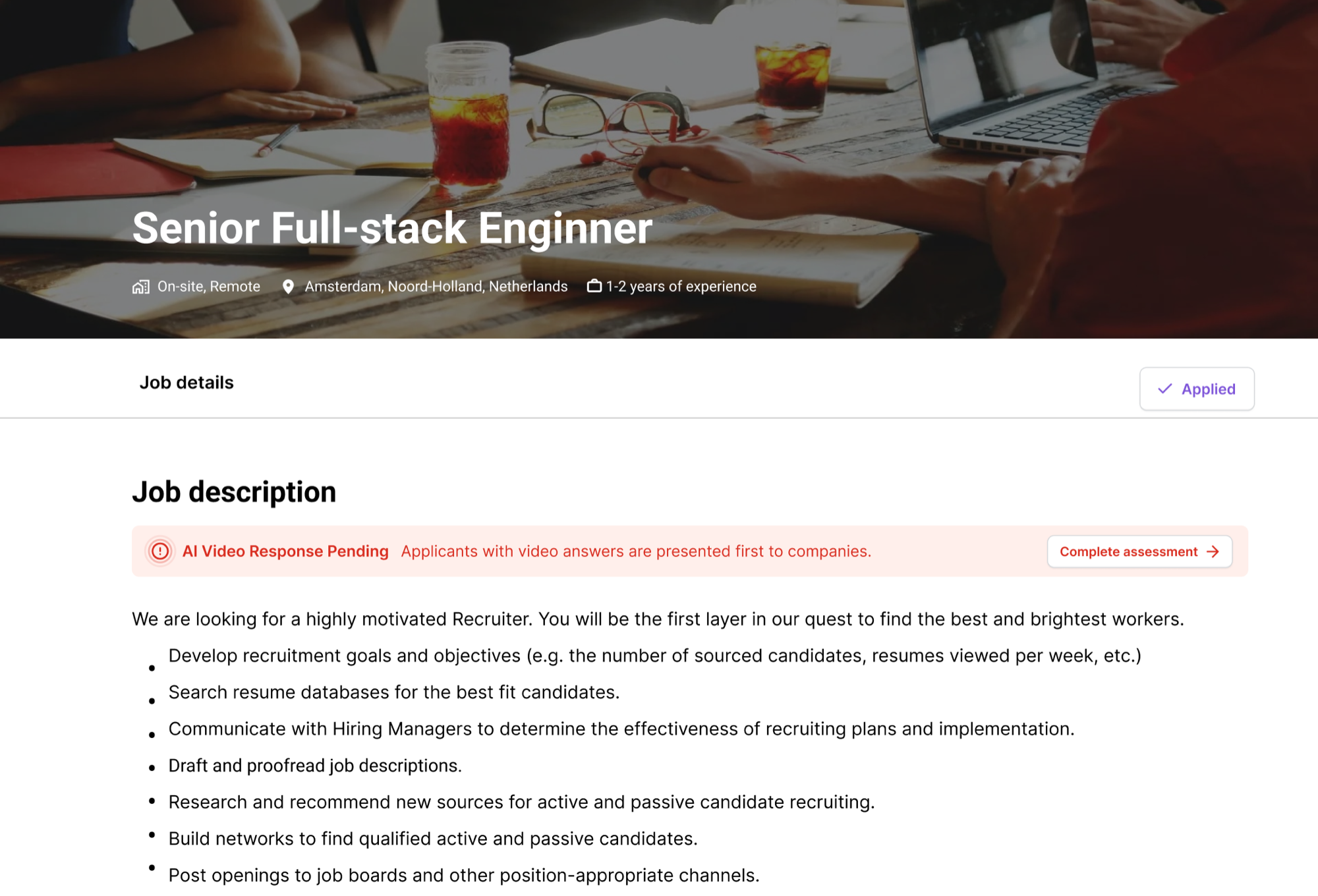
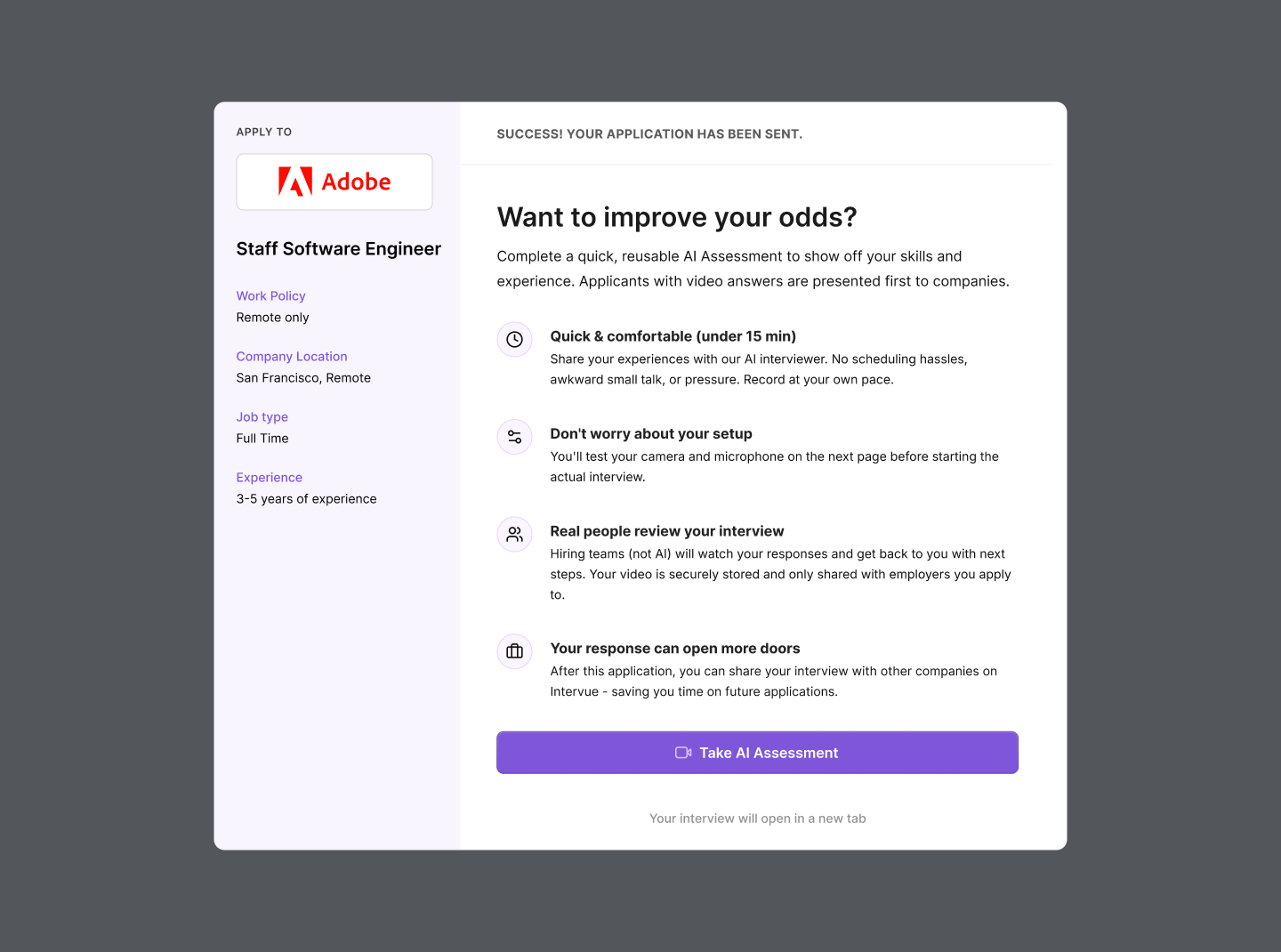
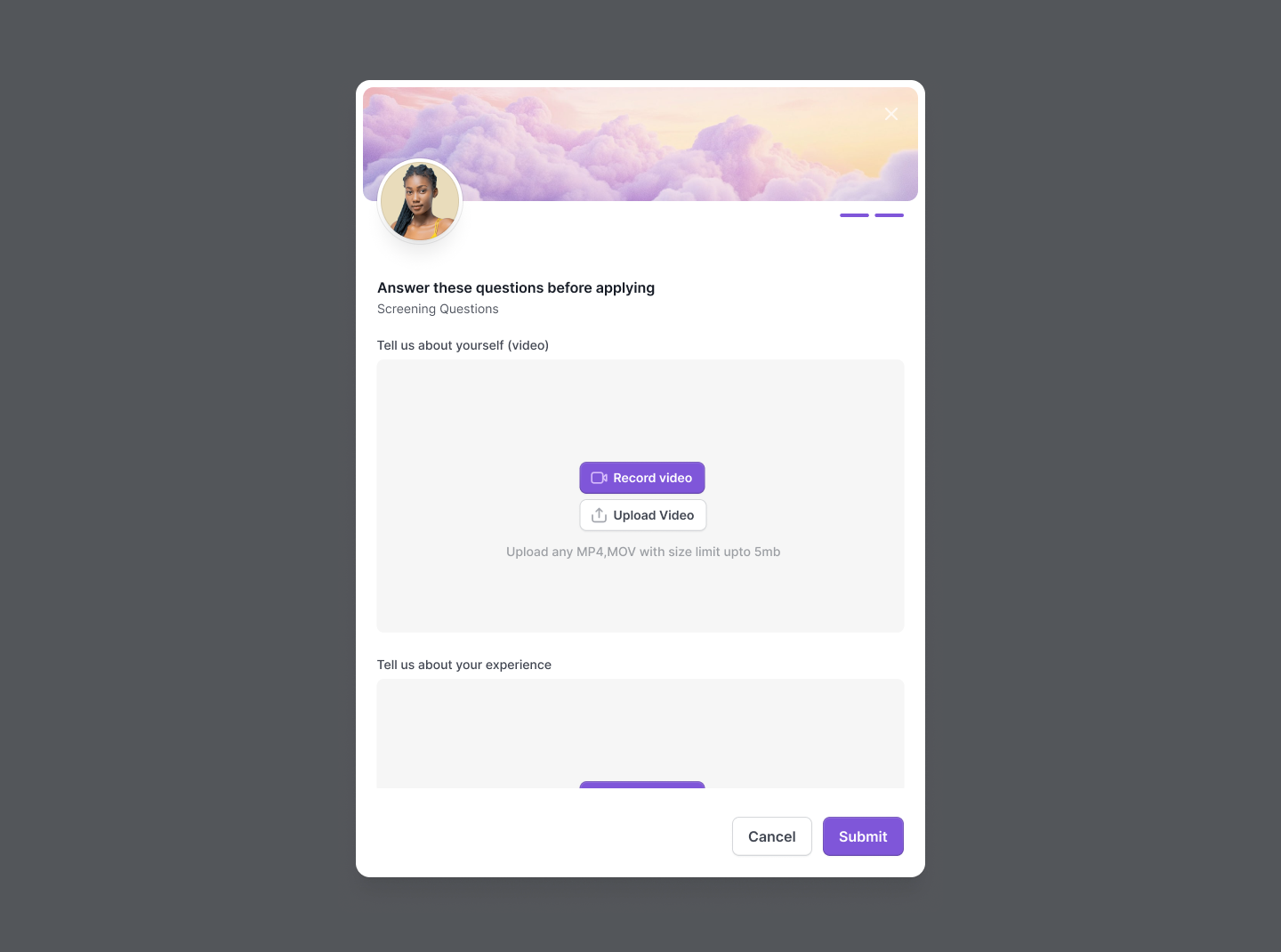
Recruiter side: set the question, the time limit, what to look for, and the score below which applicants are turned away.
Spot the best matches at a glance
Once screening runs, every applicant is tagged Most fit or Least fit with a match score and a link to their report. Recruiters start with the strongest candidates instead of reading hundreds of resumes in arrival order.
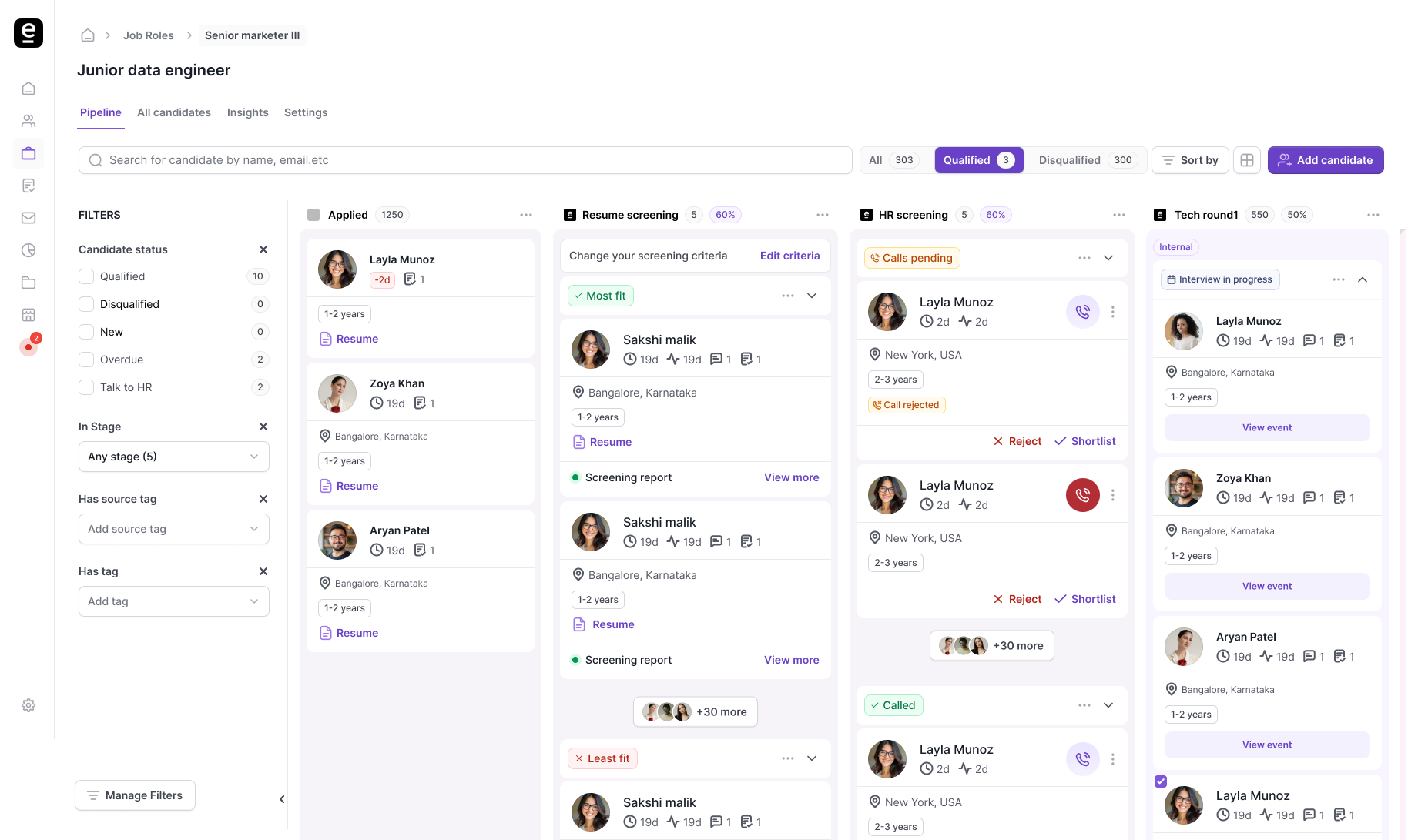
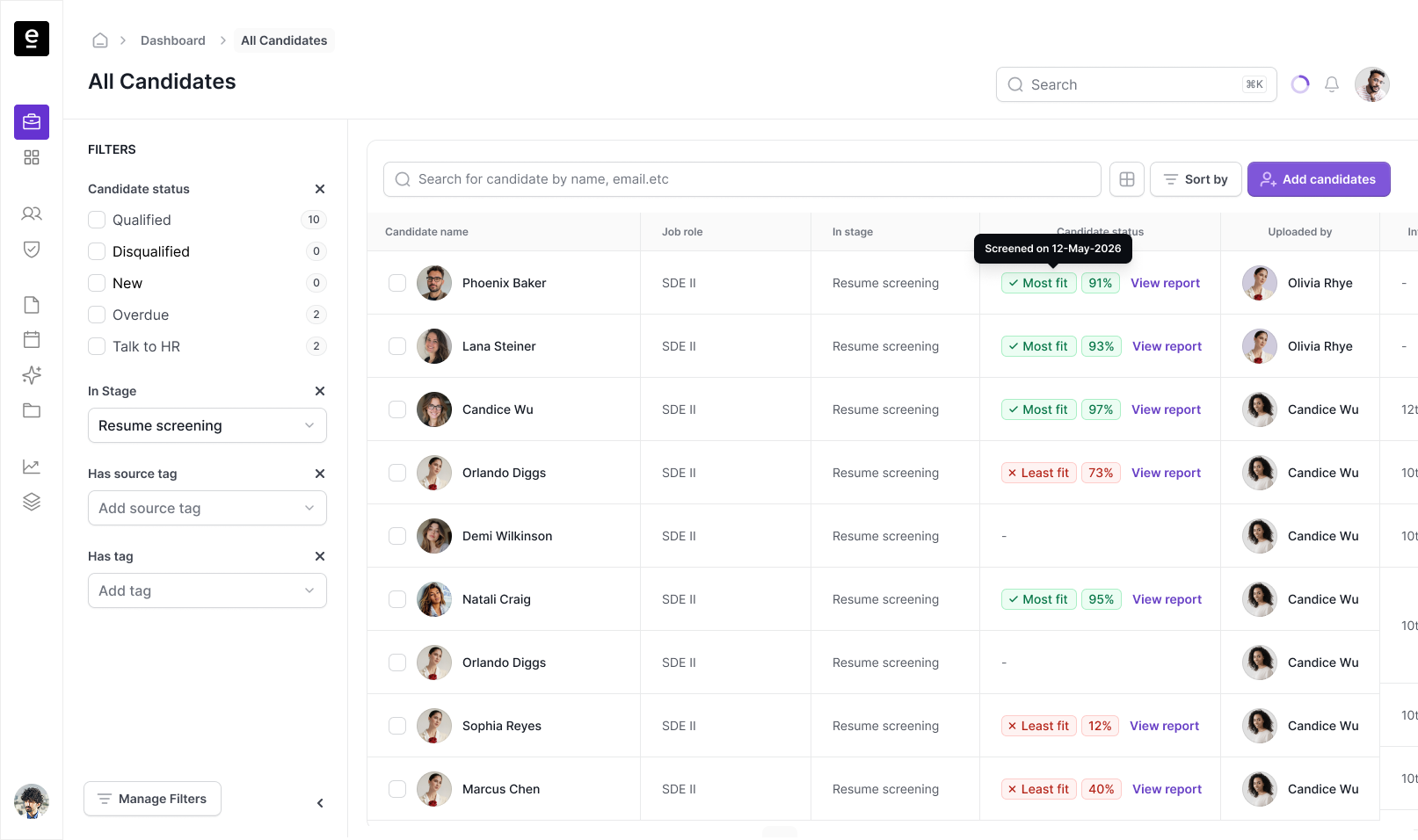
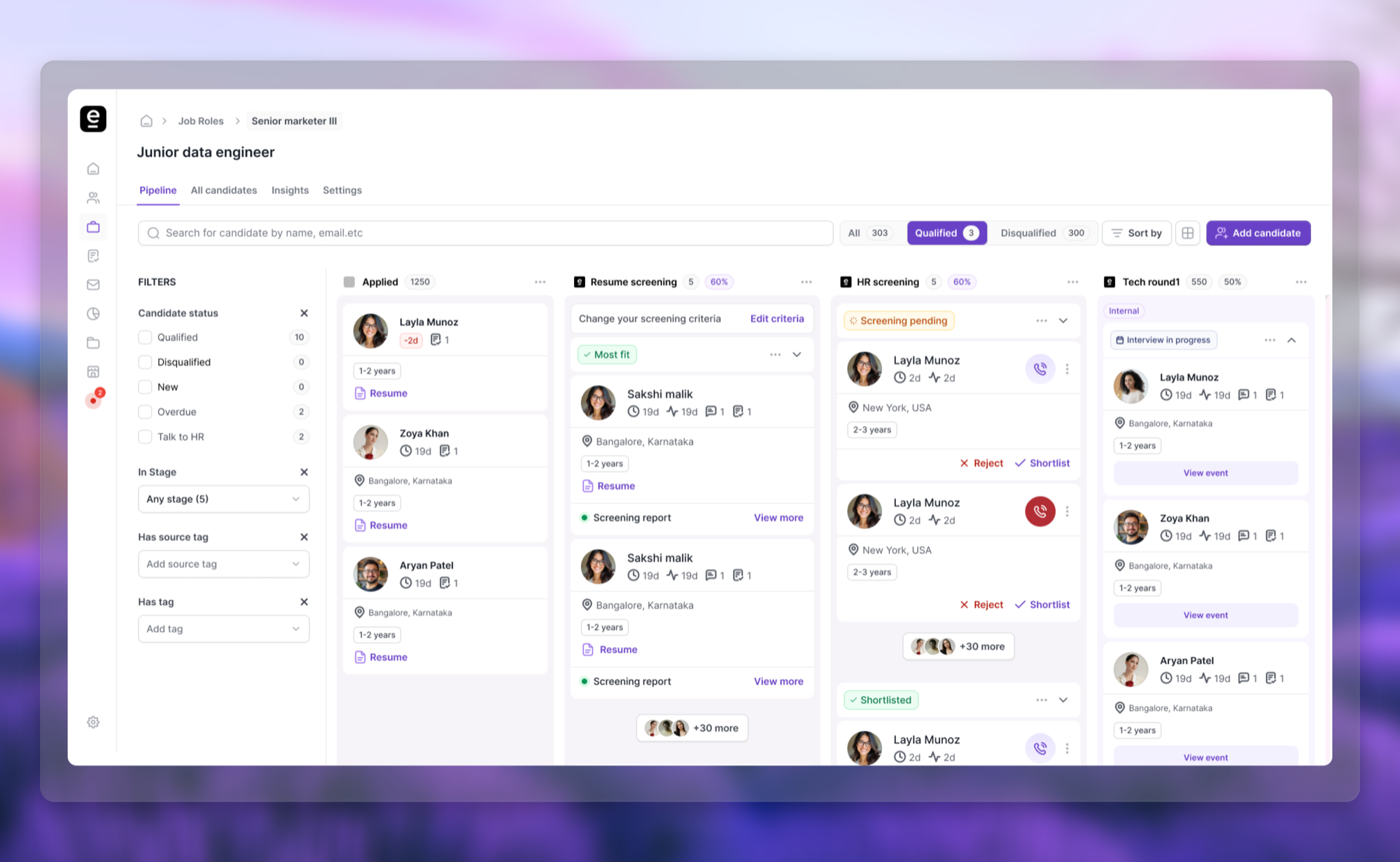
Pipeline view: the screening column splits candidates into Most fit and Least fit, and the criteria can be edited right there.
Design Outcomes
Impact measured through design system adoption, workflow efficiency, and structural improvements to the hiring pipeline.